Leak Detection
Trace a hidden leak behind a wall, under a slab or along the buried line before any wall has to be opened.
After the second or third pinhole leak, patching stops making sense. Repiping swaps the worn supply pipe for new lines and ends the cycle of repairs.
Call to talk through the symptoms, and a local contractor can explain whether repiping fits your house.
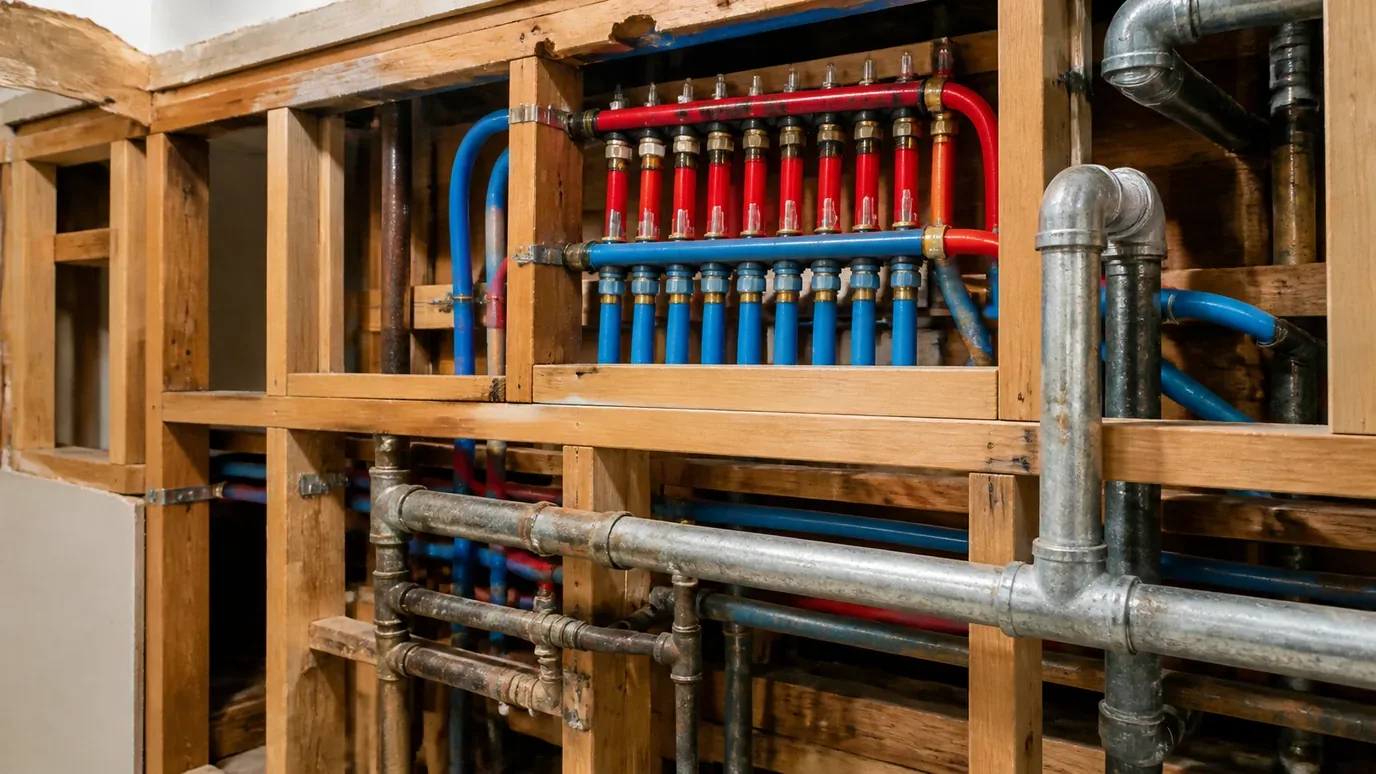
Galvanized steel was common in older houses. It rusts inside, clogs and eventually leaks. Polybutylene, a gray plastic used widely from the late 1970s into the mid-1990s, can become brittle at fittings. Copper lasts a long time but can pinhole in some water conditions.
Westminster's water report lists pH in a range that is alkaline at the upper end, with moderate hardness. Corrosion behavior depends on the house, so a plumber should look at the actual pipe, not guess from the water.
The contractor runs new lines from the main shutoff to each fixture, usually with PEX tubing and a manifold. PEX bends around corners, so it needs fewer fittings and fewer openings in the walls.
Access holes are cut at key points and patched. Many owners stay in the house with limited water for a day or two. Ask for the shutoff plan, and for how the crew protects floors and furniture.
Cities along the north Denver metro grew in waves, so a single street can hold homes with different pipe generations. Check the age of the house and any past remodels before assuming the pipes match.
The city's service line inventory covers the street side and the meter. The pipes inside your walls are your own, so the home inspection report is the best record of what is there.
The number varies widely because every house is different. Look at these points when comparing bids.
Get at least two written scopes and compare what each includes, since the cheapest bid often leaves out patching.
A partial repipe replaces the worst run, such as the kitchen and bath supply or the line to the water heater. It makes sense when the rest of the pipe tests sound.
A whole-house repipe is better when failures keep appearing in different spots or when a material is known to be defective. It costs more up front and ends the repair cycle.
Westminster lists modifications to plumbing systems among work that needs a permit. Your contractor should pull it and arrange the inspection.
Plan for drywall repair and paint afterward, since those trades are often outside the plumbing quote.
Find out which pipe material the quote assumes, and the reason. Ask whether a permit is included and who schedules the inspection. Ask how the crew handles dust and whether they protect floors.
Ask what is left for you to finish. If drywall, paint or flooring are not part of the quote, plan and budget for them separately.
Trace a hidden leak behind a wall, under a slab or along the buried line before any wall has to be opened.
Fix or replace the buried supply pipe running from the meter to your foundation.
Shut the water off fast, then cut out and replace the cracked or split section.
Repeated leaks, discolored water, falling pressure and a known problem material are the main signs. A plumber can inspect and test sections before recommending a full job.
Most houses need several days, with house size and access setting the pace. Ask the contractor how long the water will be off each day.
Often not, though water is off for part of each day. Some owners choose to stay elsewhere for comfort.
The city lists plumbing system modifications among work that needs a permit. Your contractor should handle it.
Yes, the dispatcher answers around the clock. A spraying pinhole calls for the main valve to be closed first. The repipe itself is planned work, so the urgent call covers stopping the leak.
Call and describe the history of leaks in the house. A contractor can explain whether repair or repiping is the better route.
Service area centered on Westminster and the nearby Denver north-metro cities.