Water Heater Installation & Replacement
Swap a dead tank for a new one and choose capacity, fuel type, venting and placement.
A cold shower is bad enough. A heater leaking onto a basement floor is worse. Either way, the first step is to learn what failed before deciding whether to repair or replace.
For a leaking tank, close the cold inlet valve and then phone.
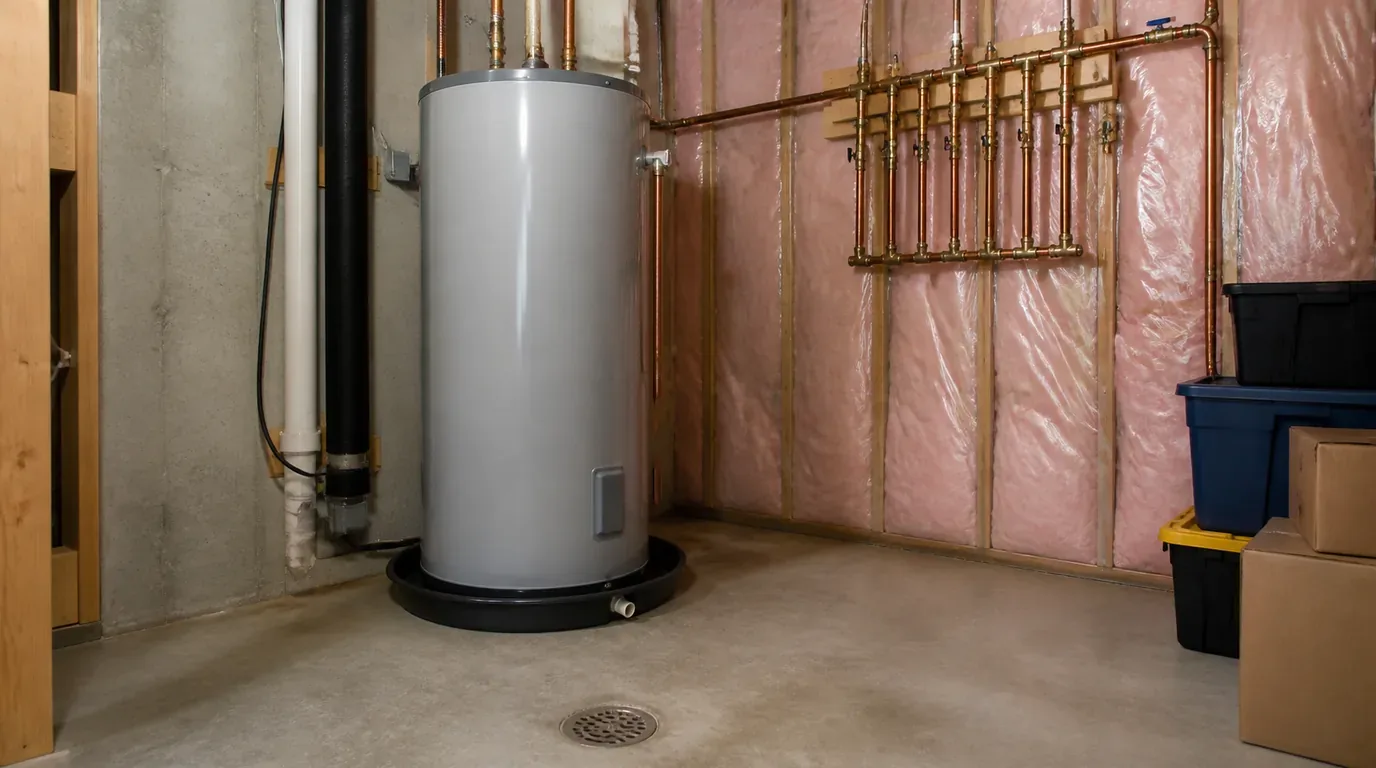
With an electric unit, look at the breaker and the thermostat's red reset button. With gas, confirm the pilot flame is burning and the gas valve is open. Any rotten-egg odor means you step outside first and contact 911 or the gas utility.
Next, look at the pan and the floor. A drip from the relief valve or a fitting may be a small repair. Water seeping from the tank seam is a failed tank.
Heating elements, thermostats, gas control valves, thermocouples and relief valves all wear out and can be replaced for far less than a new heater. A flush clears sediment that makes the tank noisy and inefficient.
An anode rod protects the tank from corrosion. If it is consumed, the tank starts to rust through. Replacing the rod early can extend the life of a heater that is otherwise sound.
Westminster's 2022 water report lists hardness at about 7 to 8 grains per gallon. That is enough to build scale on heating elements and the tank floor over time, so a periodic flush is worthwhile.
The city sits above 5,000 feet, and gas appliances need to be set up for altitude. When a gas heater is replaced, confirm that the new unit and its venting suit the elevation.
The failed part and how easy it is to reach decide the bill. These points count most.
Ask for the repair quote and the replacement quote side by side before you decide.
A tank that leaks from the shell cannot be fixed. Age matters too. Many tank heaters last around a dozen years, and a repair on a unit near that age is a gamble.
Ask the contractor to state the repair cost, the remaining life they expect and the cost of replacement, so you can compare. The replacement page covers sizing, fuel and venting.
A relief valve discharge line should run to a safe spot. If the valve drips often, the system may have thermal expansion or excess pressure. A pressure gauge and an expansion tank often solve it.
Never plug or cap the relief valve. It is the last defense against a tank that overheats. Gas heaters also need combustion air and a proper vent, so a heater in a small closet should be inspected.
These steps help the contractor diagnose the problem faster.
Swap a dead tank for a new one and choose capacity, fuel type, venting and placement.
Flush scale, repair or put in an on-demand heater.
Dry and rebuild a home after a pipe leak, a frozen-pipe burst or a sewer backup.
With an electric tank, begin at the breaker and the thermostat reset. With a gas tank, inspect the pilot and the gas valve. A failed element, thermostat or thermocouple is also common.
Shut off the cold water supply to the tank and turn off power or gas. A tank leaking from the shell needs replacement, so call as soon as you can.
Sediment collects on the bottom of the tank and traps water that boils under it. Flushing the tank can reduce it. If the tank is old, replacement may be wiser.
Many tank heaters last around ten to fifteen years, depending on water quality and care. Hard water shortens life if the tank is never flushed.
Yes. The dispatch line runs 24/7, and a tank that is leaking or cold needs no appointment slot to report. Shut the cold inlet if water is spreading, and ask for the soonest arrival window.
Shut off the supply valve to the tank, then call. Say whether it is gas or electric and what you see.
Service area centered on Westminster and the nearby Denver north-metro cities.