Burst Pipe Repair
Shut the water off fast, then cut out and replace the cracked or split section.
A pipe repair stops the water. Restoration removes what it left behind: wet drywall, carpet pad, insulation and the moisture hiding in the framing.
Stop the source if you can, then call. This page uses its own phone line.
Restoration crews sort water into categories. Clean water from a supply line is the least risky. Gray water from a washer or dishwasher carries some contamination. Black water from a sewer backup or flood carries pathogens and requires protective gear and disposal of affected materials.
These three categories come from the IICRC S500 standard for water damage restoration. Ask any crew whether its work follows that standard, and tell them the source of the water when you call, since it decides how they handle the cleanup.
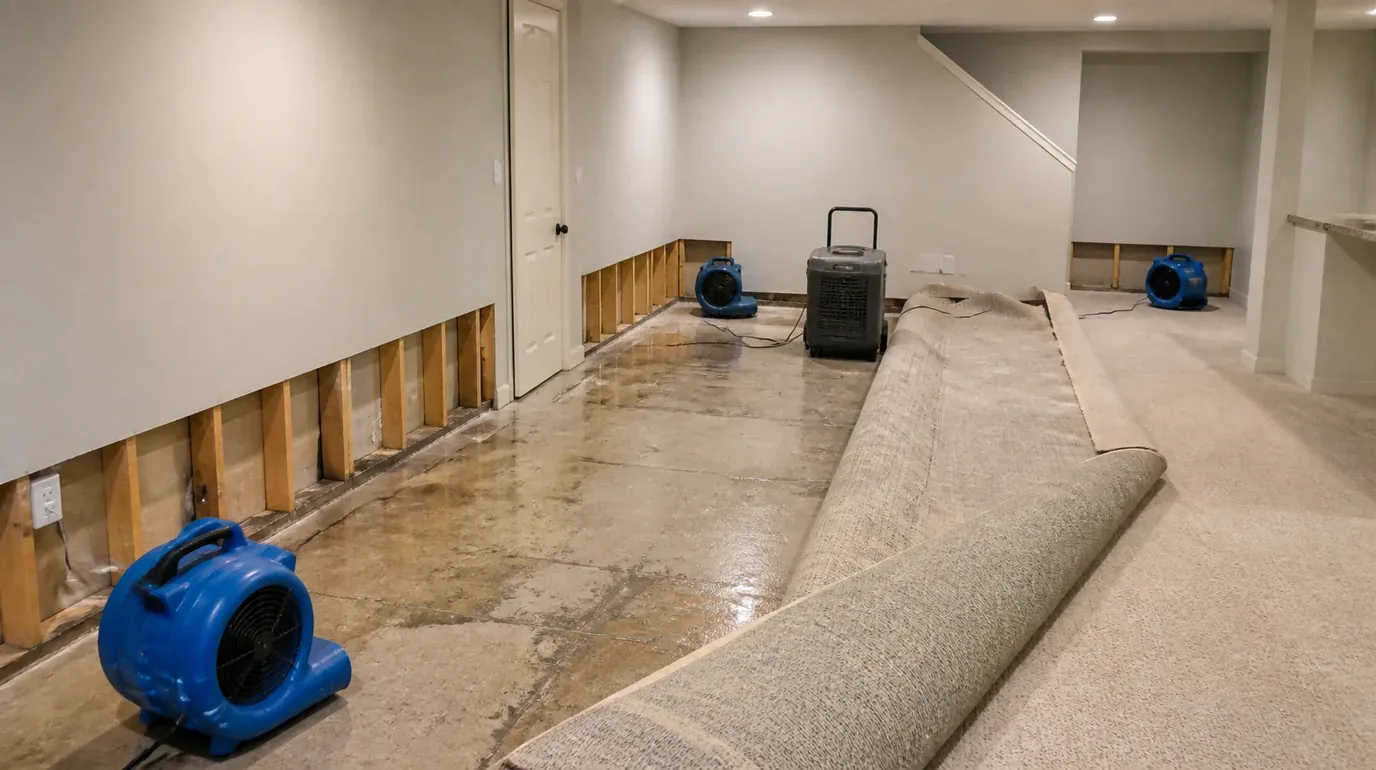
The crew extracts standing water, removes wet materials that cannot be dried and sets air movers and dehumidifiers. Moisture meters and thermal cameras show where water remains.
Drying usually takes a few days, depending on the amount of water and the materials. The crew returns to check readings until the structure is dry.
Cost depends on the amount of water and the materials. These items matter.
Ask for the scope in writing, and keep the drying logs for your insurer.
Water finds the lowest level, and in many homes here that is a finished basement. Carpet, pad and drywall wick moisture upward, so damage looks bigger than the puddle.
A frozen pipe that splits in an unheated space can run for hours or days. If you return from a trip to a wet house, shut off the main and call right away.
Mold can begin to grow within a day or two on wet porous materials. Fast drying is the best defense. If mold is already visible, the crew can test and advise on removal.
Do not use a household fan to blow air over wet drywall without a plan. Moving air can spread spores.
Report the claim as soon as you can. Many policies cover sudden water damage but not slow leaks or flood from outside. Ask the adjuster what is covered and what documentation is needed.
Keep photos, receipts and a list of damaged items. Save samples of damaged materials if the adjuster asks.
These steps limit the damage.
Take photos and short videos of the damage before anything is moved. Write down what was affected and keep samples of damaged flooring or fixtures if the insurer asks. Good records speed up the claim and the scope of work.
Shut the water off fast, then cut out and replace the cracked or split section.
Thaw an iced-up line safely, inspect it for splits and reroute or insulate the run that keeps freezing.
Trace a hidden leak behind a wall, under a slab or along the buried line before any wall has to be opened.
Stop the source, then call. A plumber repairs the pipe and a restoration crew dries the structure. This page's line connects you to restoration.
Often several days, depending on the extent. The crew monitors moisture levels until they return to normal.
Sudden events like a burst pipe are often covered, though slow leaks and outside flooding may not be. Call your insurer promptly.
For a small spill, yes. For anything larger, moisture hides in walls and under floors, so a professional with meters is safer.
Yes. This page carries its own dedicated number, staffed at every hour. If it is safe, stop the source of the water before dialing.
Stop the source if you can, then call. The dispatcher connects you with a restoration contractor.
Service area centered on Westminster and the nearby Denver north-metro cities.